Once a Month Becomes Once a Week: How Chicken Subscriptions Are Quietly Rewiring the American Kitchen
There's a particular kind of Sunday that a lot of Americans know well. You've got half a package of boneless skinless breasts from the grocery store, vague intentions about a stir-fry, and the creeping suspicion that you're going to end up ordering pizza anyway. For decades, that was just the rhythm of buying chicken — impulsive, inconsistent, and weirdly unsatisfying for something you eat multiple times a week.
Then the boxes started showing up.
Farm-direct chicken subscriptions have been quietly growing for years, but something shifted in the last few years that turned a niche habit into a genuine cultural moment. People aren't just buying chicken differently. They're thinking about chicken differently — and that psychological shift is more interesting than it might first appear.
The Loyalty Loop Nobody Saw Coming
Subscription commerce has trained Americans to expect recurring deliveries of everything from razors to wine to dog food. But meat — real, perishable, farm-sourced meat — is a different animal (pun very much intended). The assumption was always that people would hesitate. That protein feels too personal, too variable, too important to hand off to an algorithm.
Turns out, the opposite is true.
Retention data from farm-direct box programs consistently shows that chicken subscribers stick around longer than almost any other food subscription category. The reason, according to researchers who study consumer behavior in the food space, comes down to a concept called commitment anchoring. Once someone has built their weekly meal plan around a predictable delivery — specific cuts, known quality, consistent sourcing — they don't want to go back to the grab-whatever's-on-sale approach at the supermarket. The box becomes the baseline.
And once the baseline shifts, everything else shifts with it.
"I Don't Even Walk Down That Aisle Anymore"
Talk to longtime chicken box subscribers and you start hearing the same kinds of stories. Sarah, a home cook in Nashville who's been getting a monthly farm-direct box for about two years, puts it bluntly: "I don't even walk down the poultry aisle at the grocery store anymore. I used to spend ten minutes standing there trying to figure out which package was the best deal. Now I just know what's coming, I know where it came from, and I plan around it."
That shift in grocery store behavior is showing up in purchasing data, too. Households that subscribe to farm-direct meat boxes report meaningful reductions in spontaneous protein purchases — the kind of impulse buys that used to drive a significant chunk of supermarket poultry revenue. It's not that they're eating less chicken. They're just buying it from a completely different place, with a completely different mindset.
For Marcus, a dad of three in the Denver suburbs who started subscribing after a friend recommended it, the change was less about convenience and more about what he describes as "cooking confidence." "When the box comes, I actually look forward to figuring out what to do with it," he says. "Before, I'd buy chicken and it felt like a chore. Now it feels like a project. The quality is just so much better that I want to do it justice."
That's not an accident. When people know their chicken came from a specific farm, was raised on a specific diet, and arrived fresh rather than sitting in a distribution center for a week, the psychological investment in cooking it well goes up considerably.
What Subscriptions Are Doing to Price Expectations
Here's where it gets really interesting for the broader food industry: chicken box subscribers are fundamentally recalibrating what they think chicken should cost.
Conventional grocery store poultry pricing has long been driven by loss-leader strategies — cheap chicken gets people in the door, and the store makes its margin elsewhere. That model trained multiple generations of American shoppers to expect cheap chicken as a kind of birthright. A dollar-something per pound for boneless breasts felt normal. Anything more felt like a rip-off.
Subscription models break that conditioning in a specific and deliberate way. When you're paying a premium for a box and you can see exactly why — the farming practices, the breed, the feed, the processing standards — the price stops feeling arbitrary. It starts feeling earned. Subscribers report that after six months or so, they stop comparing their per-pound cost to what they'd pay at a big-box store. The comparison stops making sense to them, because they've stopped seeing those products as equivalent.
This is a significant psychological shift, and it has real implications for how independent farms and artisanal producers can compete long-term. The subscription model isn't just a distribution channel. It's a re-education program.
Meal Planning Gets a Backbone
One of the less glamorous but genuinely transformative effects of chicken subscriptions is what they do to weekly meal planning. Knowing that a specific set of cuts is arriving on a specific day gives home cooks a structural anchor that most of us desperately lack.
Food waste researchers have noted that households with predictable protein deliveries tend to waste significantly less food overall — not just the chicken itself, but the vegetables and pantry staples that get bought to accompany it. When you know you're getting bone-in thighs this week, you buy the ingredients that go with bone-in thighs. The planning gets tighter, the waste gets lower, and the cooking gets more intentional.
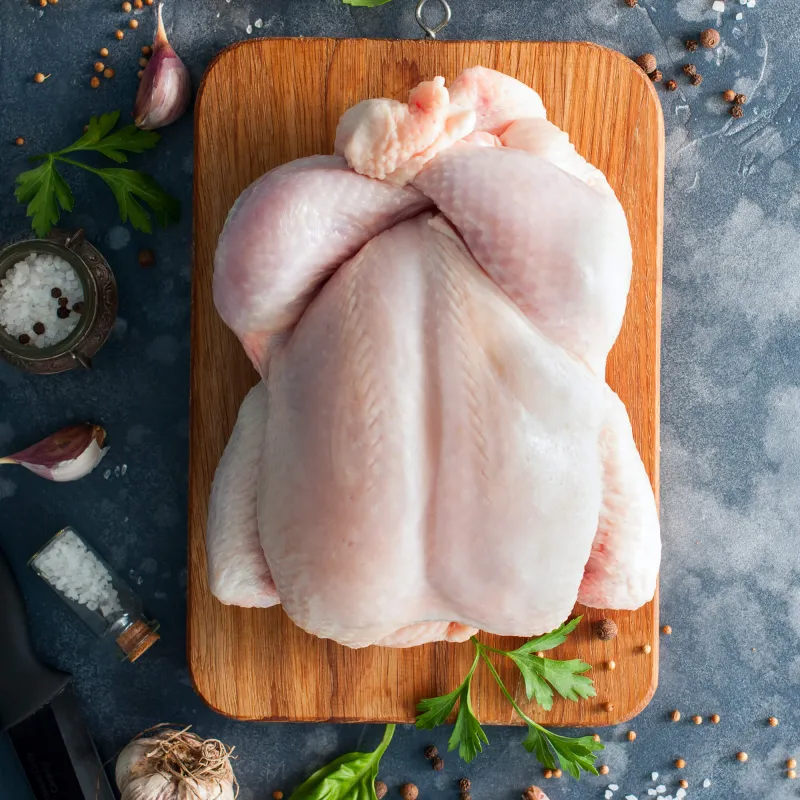
It also, perhaps counterintuitively, pushes people to learn new techniques. Whole birds and less familiar cuts show up in boxes, and subscribers — rather than being put off — tend to lean in. YouTube tutorials on spatchcocking get watched. Brining experiments happen. Backs and necks that would've been ignored at the grocery store get turned into stock. The box becomes a kind of low-stakes culinary curriculum.
What This Tells Us About Where Food Culture Is Heading
The rise of chicken box subscriptions isn't happening in a vacuum. It's part of a broader realignment in how Americans relate to food — one that values transparency, traceability, and a genuine connection to where things come from. The farm-to-table ethos that used to feel like a restaurant luxury is slowly becoming a home kitchen expectation.
Subscription models are uniquely positioned to accelerate that shift because they make the values tangible. It's one thing to say you care about how your chicken was raised. It's another to have a monthly relationship with a farm that proves it, delivery after delivery.
For the farmers and producers doing this work — the ones raising birds with care, feeding them well, and running operations that treat the land and the animals with respect — the subscription economy isn't just a business model. It's a feedback loop. Loyal customers mean predictable revenue, which means the ability to plan, invest, and keep doing things right.
And for the rest of us? It means Sunday looks a little different now. The box is coming. The plan is set. The pizza place can wait.