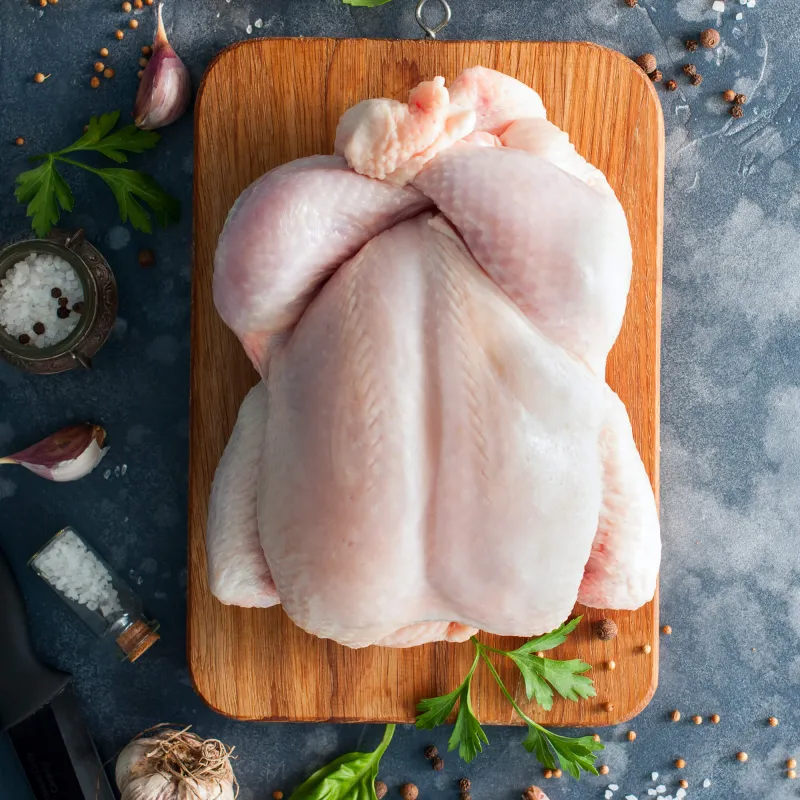
How a Box of Chicken Is Breaking Big Poultry's Grip on Your Dinner Table
For decades, buying chicken in America meant one thing: grab whatever was shrink-wrapped under fluorescent lights at the grocery store, probably produced by one of four or five massive corporations that control the better part of the national supply. You didn't know the farm. You didn't know the feed. You definitely didn't know how long that bird had been sitting in a distribution center. You just bought it, cooked it, and moved on.
That arrangement is starting to crack — and the wedge driving it open is a cardboard box packed with ice and showing up on front porches across the country.
The Rise of the Subscription Model
Direct-to-consumer chicken subscriptions aren't entirely new, but they've hit a serious inflection point over the last few years. Services built around delivering whole birds, specific cuts, or curated boxes of pasture-raised chicken directly to households have grown from niche novelties into legitimate market forces. Some of the companies behind them are still small operations run by farmers who got tired of the middleman. Others have scaled into multi-state logistics operations with serious venture backing.
What they share is a common pitch: cut out the distributor, the broker, the retailer, and the margin-skimming at every step in between. Sell directly to the person who's actually going to eat the chicken.
The model works for a pretty straightforward reason — consumers get better product and producers get a fairer cut of the price. When a farm sells through a conventional supply chain, it might receive somewhere around 20 to 30 cents of every dollar the end consumer spends. With a direct subscription, that number can climb dramatically. That difference doesn't just pad the farmer's bottom line; it funds better feed, more humane raising conditions, and the kind of slower growth timelines that actually produce flavorful meat.
What the Big Players Are Noticing
Here's where it gets interesting. For a long time, the major poultry conglomerates — the names you'd recognize from every supermarket cooler — largely ignored the artisanal chicken movement. It was too small, too regional, too focused on customers willing to pay a premium that most households supposedly couldn't afford.
That dismissiveness is fading fast.
Several large-scale producers have quietly launched their own "farm direct" or "premium" sub-brands in recent years, positioning them to compete with the aesthetic and messaging of subscription box companies. Others have lobbied aggressively against labeling standards that would make it easier for consumers to distinguish genuine pasture-raised chicken from birds raised in conventional confinement with a few marketing buzzwords slapped on the package.
The pressure is real. Consumer surveys consistently show that younger buyers — the demographic driving most growth in premium food categories — care more about supply chain transparency than previous generations. They want to know where their food comes from. They're willing to pay for it. And increasingly, they're willing to set up a recurring order with a company that can actually answer their questions.
The Transparency Advantage
One of the most significant things subscription box services have done isn't logistical — it's informational. When you sign up for a direct chicken delivery service, you typically get a lot more context than a barcode and a "best by" date. You might get the name of the farm. The breed of bird. Whether it was raised on pasture, what it was fed, how it was processed, and how far it traveled to reach you.
That kind of transparency is genuinely disruptive because it creates accountability. A company that tells you exactly which farm your chicken came from can't quietly switch to a cheaper supplier without you noticing. A brand that builds its identity around heritage breeds and small-batch processing can't quietly scale into factory conditions without fundamentally breaking what it promised.
Conventional producers, by contrast, operate behind layers of abstraction that have historically made accountability very difficult. Your grocery store chicken might have been processed at a facility handling millions of birds a week, sourced from dozens of contract farms operating under varying conditions. The label tells you almost nothing about that journey.
Pricing: The Myth of the Expensive Alternative
The most common objection to subscription chicken services is cost. And yes, on a per-pound basis, a pasture-raised bird from a direct-to-consumer platform is going to run you more than the loss-leader whole chicken at a big-box store.
But that framing misses a few things.
First, conventional chicken prices are artificially suppressed by a supply chain that has historically externalized a lot of its real costs — environmental, labor-related, and otherwise. The cheap chicken at the store isn't cheap because it's produced efficiently in some morally neutral sense. It's cheap because a lot of the actual costs get paid somewhere else, by someone else.
Second, when you account for waste, yield, and flavor, the math on premium chicken often gets closer than it looks. A well-raised bird with better muscle development and fat distribution tends to cook more forgivingly, waste less moisture, and satisfy more thoroughly. You might use less of it to feel equally fed. Leftovers stretch further. Bones make better stock.
Subscription services also tend to encourage nose-to-tail cooking habits — buying whole birds, working through different cuts across a week, using every part. That's a genuinely more economical way to eat chicken, regardless of what you paid per pound at the start.
What This Means for the Future of American Poultry
The subscription box movement isn't going to replace conventional chicken production overnight. The scale difference is still enormous, and plenty of American households are making food decisions primarily on price in a way that premium delivery services simply can't serve right now.
But the disruption doesn't need to be total to be meaningful. Even capturing a relatively small slice of the premium end of the market creates real pressure on the broader industry. It establishes competing standards. It educates consumers. It gives independent farmers a viable path that doesn't require signing onto a contract growing arrangement with a massive integrator.
And it forces a conversation that the industry has avoided for a long time: what are we actually paying for when we buy chicken, and who gets to decide what "good" looks like?
That conversation is happening now, one subscription box at a time. The big players are paying attention, even if they're not ready to admit it publicly. The farmers building these direct relationships with customers aren't waiting for permission.
The box has been opened. There's no putting the chicken back in.