Same Bird, Completely Different Flavor: America's Regional Chicken Terroir, Explained
We talk about terroir constantly when it comes to wine. The slope of a hill, the mineral content of the soil, the direction of the prevailing wind — all of it gets credit for why a Pinot Noir from Burgundy tastes different from one grown in the Willamette Valley. Coffee people do it too. So do cheese nerds and olive oil enthusiasts.
But chicken? Chicken is just chicken, right?
Wrong. Very wrong. And once you understand why, you'll never look at a farm-direct bird the same way again.
What Terroir Even Means for a Chicken
The word terroir comes from the French word for "earth" or "land," and at its core it describes the idea that the environment where something is produced leaves a mark on its flavor. For plants, that's relatively intuitive — what's in the soil ends up in the fruit. For animals, the connection is a little less direct but no less real.
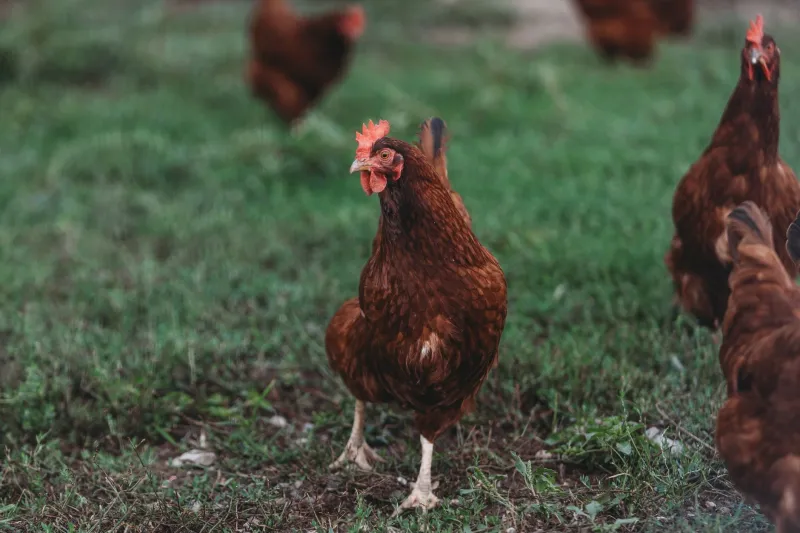
For a chicken, terroir is a combination of several interacting factors: breed genetics, what the bird eats, how much space it has, the climate it lives in, and even the microbial environment of the pasture it ranges across. Change any one of those variables significantly, and you change the flavor of the meat.
This isn't theoretical. It's measurable. And it's why the chicken box we ship from a farm in Vermont has a fundamentally different flavor profile than one from a small operation in central Texas — even if both birds are raised with identical care and intention.
The Pacific Northwest: Mild Climate, Rich Forage, Clean Fat
Farms in western Oregon and Washington benefit from something most of the country can't replicate: a mild, wet climate that produces lush, persistent pasture for most of the year. Birds that range on this kind of land eat a diverse diet of grasses, insects, and clover that's available nearly year-round.
The result is chicken with a distinctly clean, mild flavor and unusually white, well-distributed fat. The fat cap on a Pacific Northwest pasture bird tends to be lighter in color and less intense in flavor than birds raised in warmer, drier climates — which some people love and others find too subtle. It's chicken that lets other flavors lead, which is why chefs in Portland and Seattle tend to reach for these birds when they want something that pairs beautifully with delicate sauces or lighter preparations.
The cool temperatures also mean slower growth for outdoor-raised birds, which contributes to better muscle development and a slightly firmer texture than fast-grown commercial varieties.
The Southeast: Heritage Breeds, Red Clay, and Serious Flavor
Head to the foothills of Georgia, the Carolinas, or Tennessee, and you're in a completely different flavor universe. The Southeast has a long history with chickens — it's where many of America's heritage breeds were developed and maintained — and the farms there reflect that tradition.
Birds raised in this region often have access to red clay soils rich in iron and mineral content, and they range on warm-season grasses and legumes that produce a more intensely flavored, yellower fat. The heat encourages foraging behavior, and the bugs in a Southern summer are plentiful — which means more protein from live sources and a flavor profile that's noticeably richer and more complex.
A heritage breed Dominique or Delaware chicken raised on a Georgia farm is a genuinely different eating experience than a commodity bird. The meat is darker, the skin renders more deeply, and the flavor has a savory depth that holds up beautifully to bold preparations — a hard sear, a long braise, a spice rub with smoke.
The Midwest: Grain Belt Birds with Consistent Depth
The American Midwest — Iowa, Ohio, Indiana, Missouri — is grain country, and that shapes everything about the chickens raised there. Farms in this region often supplement pasture access with locally grown corn and soybeans, which produces birds with a characteristic golden fat and a flavor profile that's rich, buttery, and familiar.
This is the flavor most Americans associate with "good chicken" because it's close to what the best versions of conventional chicken taste like — just significantly better. The fat renders beautifully, the skin crisps evenly, and the meat has a satisfying, full flavor without the intensity of a purely forage-based diet.
Midwestern farm-direct chicken is often the gateway bird for people transitioning away from supermarket poultry. It's approachable, consistent, and dramatically superior to what you find in a standard grocery store, without being so different that it requires a palate adjustment.
New England: Cold Climate, Dense Muscle, and a Shorter Season
Farming in Vermont, Maine, or upstate New York comes with real constraints — a shorter outdoor season, colder temperatures, and pastures that go dormant for months at a time. But those constraints produce something interesting.
Birds raised in New England tend to develop denser muscle tissue from ranging in cooler temperatures. The meat has a slightly chewier, more substantial texture — which sounds like a knock but is actually prized by cooks who want something that holds up to slow cooking or shredding. The flavor is clean and minerally, with a subtle earthiness that reflects the region's rocky, well-drained soils.
New England farms also tend to be small, which means the chickens are handled with extraordinary care at every stage. The short season creates a sense of seasonality around the product — something that's increasingly rare in American food culture and genuinely exciting when you experience it.
Why This Matters for What You Buy
Understanding regional chicken terroir isn't just a fun food-nerd exercise. It has real practical implications for how you cook and what you buy.
If you're making a simple roast chicken where the bird is the star, a Pacific Northwest pastured bird with clean, mild flavor lets the technique shine. If you're building a deeply flavored braise or a spiced stew, a Southeast heritage breed brings a richness that can stand up to bold ingredients. If you want something that works across a wide range of weeknight applications, a Midwest grain-finished bird is hard to beat for versatility.
At The Chicken Box Factory, we think about this constantly. The farms we source from aren't interchangeable — they each produce something distinct, shaped by where they are and how they work. That diversity is exactly the point.
The Bigger Picture
Chicken terroir is ultimately an argument for paying attention — to where your food comes from, to the specific choices farmers make, and to the flavors those choices produce. It's an argument against the idea that chicken is a blank, neutral protein that's only as good as the sauce you put on it.
A well-raised bird from a farm that knows its land is a genuinely expressive ingredient. It has a story in its flavor. And once you start tasting that story, the anonymous shrink-wrapped version starts to feel like a very poor substitute.